
Comprehensive at-home bloodwork, full health plan, physician consult, 60 days full access $149
Apply Now
Skip to content

HAIR LOSS CARE

Hair Loss Treatment

Understand the cause.
Find your next step.

Hair thinning can be frustrating. Start with a physician-guided review of your symptoms, health history and treatment goals, with whole-body support beyond a single product.

Treatment decisions are made with a licensed physician. Prescribed injectable testosterone is included with annual membership. Other medications are paid separately upfront per prescribed supply or order.

Training & nutrition Physician review All in one app
Man adjusting his hair while looking in a mirrorWoman in a turquoise shirt walking outdoors under a blue sky

01 / TREATMENT OPTIONS

Hair loss care.
Built around you.

The right treatment starts with the cause of your hair loss. Explore options to discuss with your physician, including their benefits, limitations and monitoring needs.

Illustrative HollyFit Minoxidil dropper bottle with navy and silver packaging above blue water
SCALP TREATMENT

Topical minoxidil

An option applied to the scalp that can support regrowth in some people with pattern hair loss.

What to discuss with your physician

Match the product to your needs

Topical minoxidil is FDA-approved for pattern hair loss in specific products. The appropriate product and instructions depend on your situation.

Know what to expect

It takes consistent use over time, and benefits are generally lost after stopping. Scalp irritation can occur.


Illustration of a matte navy round tablet with a recessed HollyFit HF monogram on a blue background
PRESCRIPTION OPTION

Finasteride

An oral medication that lowers DHT, a hormone involved in male-pattern hair loss.

What to discuss with your physician

Understand the approved use

Oral finasteride is FDA-approved for male-pattern hair loss. It can slow thinning and support regrowth in some men. It is not approved for women and must not be used during pregnancy.

Review the risks

Possible adverse effects include sexual side effects. Discuss mood changes, fertility questions and other risks with your clinician.

Illustration of a matte light blue round tablet with a recessed HollyFit HF monogram on a blue background
OFF-LABEL OPTIONS

Oral minoxidil + dutasteride

Two medicines sometimes considered together for pattern hair loss after an individual clinical review.

What to discuss with your physician

Understand off-label use

Oral minoxidil and dutasteride are not FDA-approved for hair loss; use for this purpose is off-label. Compounded preparations are not FDA-approved.

Discuss risks and monitoring

Oral minoxidil has important cardiovascular risks, including fluid retention and serious heart-related effects. Dutasteride has pregnancy and sexual side-effect precautions. Ask your physician about the proposed formulation, alternatives and monitoring.

Illustrative HollyFit GHK-Cu dropper bottle with navy and silver packaging above blue water
TOPICAL PEPTIDE

GHK-Cu peptide hair serum

A copper peptide used in topical products, with limited evidence for hair regrowth.

What to discuss with your physician

Understand the evidence

GHK-Cu is not an FDA-approved hair-loss treatment. Evidence is not sufficient to promise regrowth or equivalence to established treatments.

Ask about the specific formulation

Discuss potential risks and whether a specific topical formulation is appropriate and available. A compounding-list designation does not mean FDA approval.

Treatment selection depends on the cause of hair loss, your health history and clinical review. Off-label use and compounded products have different approval status from FDA-approved hair-loss treatments. Membership and medication costs are separate.

02 / YOUR STARTING POINT

Start with the cause.
See the whole picture.

Hair loss can reflect genetics, temporary shedding, medical conditions or medication effects. Your plan starts with understanding what is happening, then choosing appropriate care.

Your HollyFit membership connects coaching, training, nutrition and progress tracking. Clinical care is considered separately, with treatment guided by your health and diagnosis.

01

Identify the cause

Your physician reviews the pattern and timing of your hair loss, symptoms and medications. Testing or an in-person scalp assessment may be recommended when needed.

02

Consider hormonal health

Thyroid conditions and hormonal changes can affect hair. We consider relevant symptoms and health history without assuming every case needs hormone treatment.

03

Support every life stage

Hair can change with age and around perimenopause or menopause. Nutrition, sleep and overall health belong in the conversation, alongside treatment matched to the diagnosis.

04

Review your progress

Check in with your provider about response, side effects and changes in your health. Your clinician can adjust the plan or recommend specialist care when appropriate.

From your first test
to your next workout.

Testosterone Jan 2025

842 ng/dLLow

300 ng/dL 900 ng/dL

Your level is below the optimal range.
Discuss next steps with your provider.

Step 1

Tell us what you're working toward.

Start with a health assessment covering your goals, medical history, and what you want to improve. This gives the team context for your bloodwork and the plan that follows.

Your Results Doctor Assessed

March 2026

Vitamin D68 nmol/L
Normal
TSH2.1 mU/L
Normal
Cholesterol4.9 nmol/L
High

Step 2

Get the numbers behind your health.

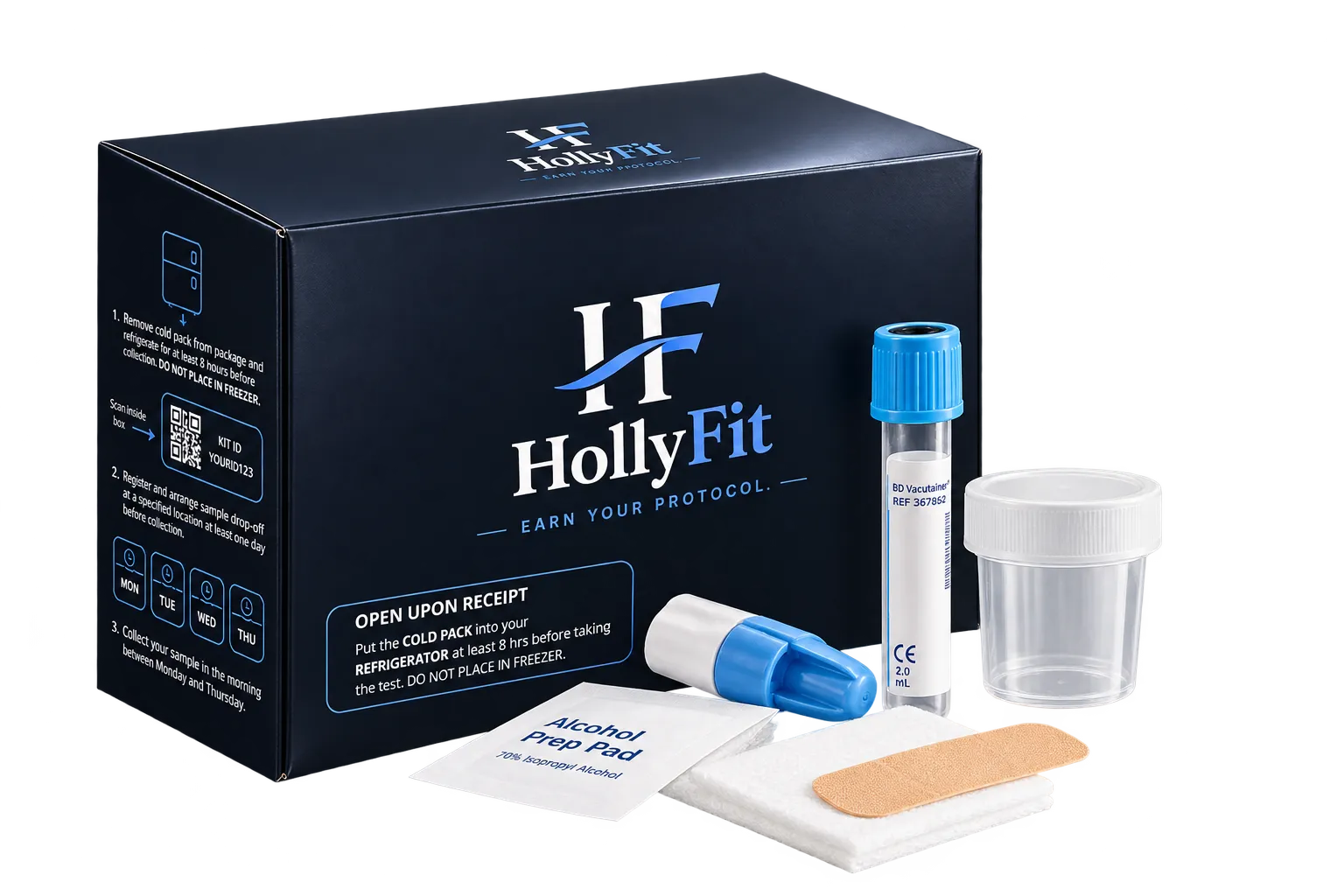
Your bloodwork kit is sent to your home. Once your sample is processed, a physician reviews your results to help inform your next steps.

Dr. Michael Harrington
Dr. Michael Harrington, MDHollyFit Medical Director

Your Personalized Protocol

Training PlanStrength, conditioning, recovery
Nutrition GuidanceMacros, meal structure, and recipes
Supplement ProtocolCore supplements for your goals
Coaching SupportSupport for your plan

Step 3

Turn your results into a plan.

Your goals, health information, and physician analysis help inform your training, nutrition, and supplement protocol. Start using the most advanced workout, nutrition, and wearable tracking tools available to truly understand what works for you.

HollyFit daily overview showing physician visits, training, nutrition, check-ins and coach messages
Daily overview
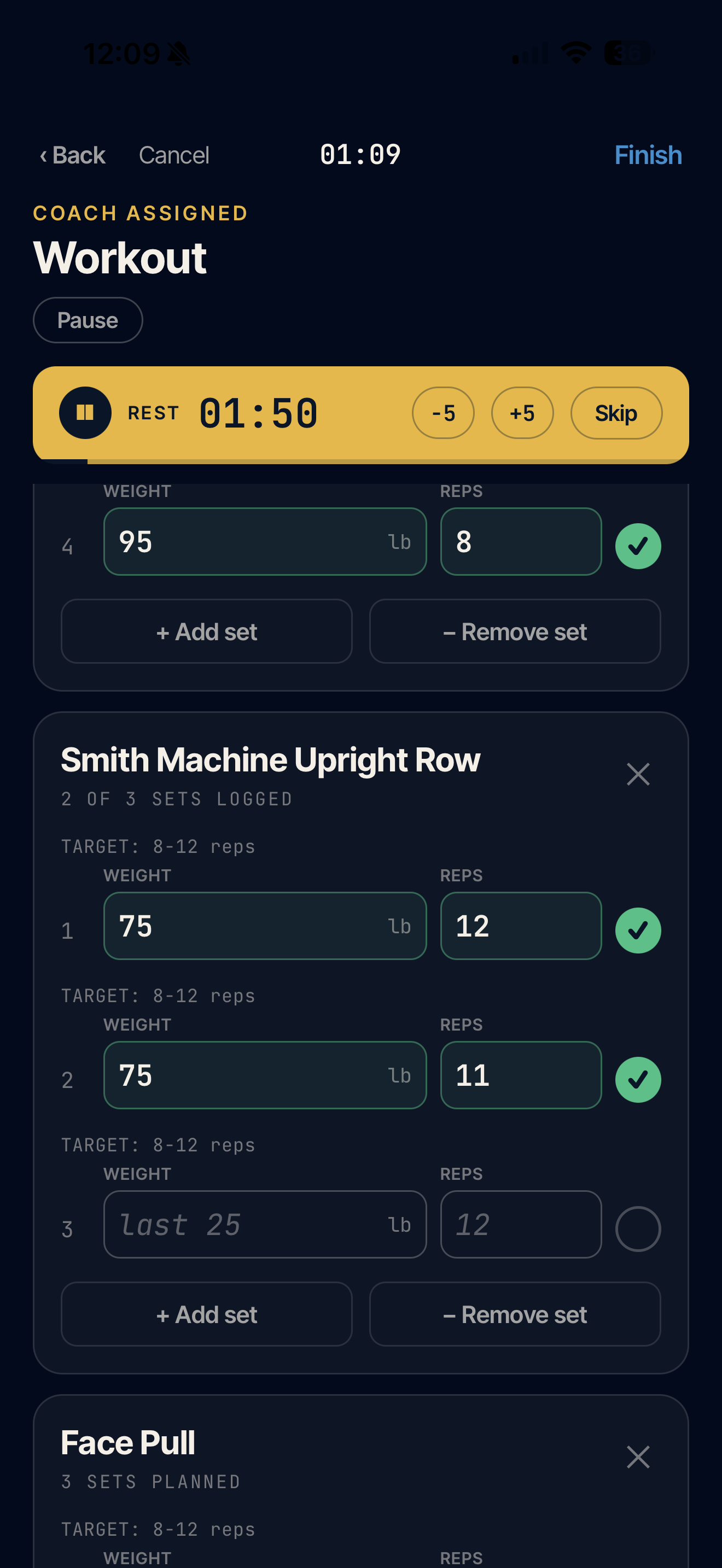
HollyFit workout tracker showing exercises, weights, reps, logged sets and a rest timer
Workout tracking

Step 4

Train, track, and keep moving.

Follow your workouts, track your daily activity, and check in with your coach through HollyFit. Continue with membership support according to the plan you choose.

Dr. Michael Harrington, HollyFit Medical Director
Dr. Michael Harrington, MDHollyFit Medical Director

04 / PHYSICIAN-GUIDED CARE

Hair loss treatment.
Plus more.

HollyFit brings physician guidance, coaching, training, nutrition and progress tracking into one connected experience. Clinical treatment is evaluated separately, with attention to the cause of hair loss, possible medication side effects and realistic expectations.

  • Review your symptoms, health history and any relevant test results.
  • Discuss benefits, side effects and alternatives for your type of hair loss.
  • Plan follow-up or specialist assessment when appropriate.
Schedule a free consult

Your physician independently makes clinical and prescribing decisions. Coach Holly Bot supports training and nutrition; it does not diagnose or prescribe.

05 / A FEW THINGS WORTH KNOWING

A few things
worth knowing.

Straight answers about hair loss treatment and HollyFit care.

How do I get started with hair loss treatment?

Start your assessment with your hair loss concerns, health history and goals. Your physician reviews the information and discusses appropriate next steps. Testing or an in-person evaluation may be needed to identify the cause. Membership and any medication costs are explained separately.

Will I definitely get medication?

No. Some hair loss needs treatment of an underlying cause, a different type of care or specialist assessment. A prescription is offered only when clinically appropriate. HollyFit membership also includes coaching, training, nutrition and progress tracking.

Who should not use hair loss treatment products?

Suitability depends on the product and your medical history. Tell your clinician if you are pregnant, planning pregnancy or breastfeeding, or have heart, blood pressure, kidney or liver conditions.

Finasteride and dutasteride must not be used during pregnancy. People who are pregnant or may become pregnant should not handle broken or crushed finasteride tablets or leaking dutasteride capsules. Sudden, patchy or unexplained hair loss needs assessment before self-treatment.

Does hair loss treatment work for alopecia areata?

Alopecia areata is an autoimmune condition and needs a different treatment plan from pattern hair loss. A dermatologist may recommend corticosteroids or other therapies. Minoxidil may sometimes be used as an additional treatment, but the options on this page should not be assumed to treat the underlying condition.

What are the side effects of hair loss treatment?

Side effects vary by medicine and formulation. Topical minoxidil can irritate the scalp. Oral minoxidil can cause unwanted hair growth, dizziness or fluid retention and carries serious cardiovascular warnings.

Finasteride and dutasteride can cause sexual side effects; finasteride labeling also includes reports of depression and suicidal thoughts or behavior. Your clinician should review medication-specific risks and what symptoms require prompt care.

Does treatment work for androgenetic alopecia?

Pattern hair loss is also called androgenetic alopecia. Topical minoxidil and oral finasteride for men can help some people slow hair loss or see regrowth. The response varies, and treatment is not a guarantee. Your clinician can explain what is realistic for your pattern of thinning and health history.

Is laser therapy as effective as oral hair loss treatment?

Some low-level laser devices may help hereditary hair loss, but results and evidence vary by device. That does not establish that a device is equivalent to a particular medication. Ask a dermatologist about evidence, cost and whether it fits your treatment plan.

Can hair loss be permanent?

Yes. Conditions that scar and destroy hair follicles can cause permanent loss. Other types of shedding may improve when the underlying cause is addressed, while pattern hair loss often needs ongoing management. A timely diagnosis helps identify which situation applies to you.

Are there interactions or precautions with hair loss products?

Share all medicines, supplements and health conditions with your clinician. Oral minoxidil needs attention to blood pressure and cardiovascular health. Finasteride and dutasteride can change PSA blood-test results, so tell the clinician interpreting that test. Your prescribed product determines the precautions and monitoring.

Are hair loss products FDA-approved?

Specific topical minoxidil products are FDA-approved for pattern hair loss, and oral finasteride is approved for male-pattern hair loss. Oral minoxidil and dutasteride are not approved for hair loss. There is no FDA-approved topical finasteride product or GHK-Cu hair-loss treatment. Compounded products are not FDA-approved, and off-label prescribing does not change a product's approved indication.

How do oral and topical hair loss treatments differ?

Topical products are applied to the scalp; oral medicines act through the body. They differ in approved uses, side effects, monitoring and practical use. Neither route is automatically better or equivalent for everyone. Follow the instructions for the specific product your clinician recommends.

How long does hair loss treatment take to work?

Hair changes gradually, and it can take several months of consistent treatment to assess response. The timing depends on the diagnosis, medication and individual. Your clinician can set a review schedule. Some treatments need continued use to maintain benefit.

Is my data private?

HollyFit’s privacy and health-data policies explain how information is used, protected and shared to provide services. Read our HIPAA policy and Privacy Policy for details.