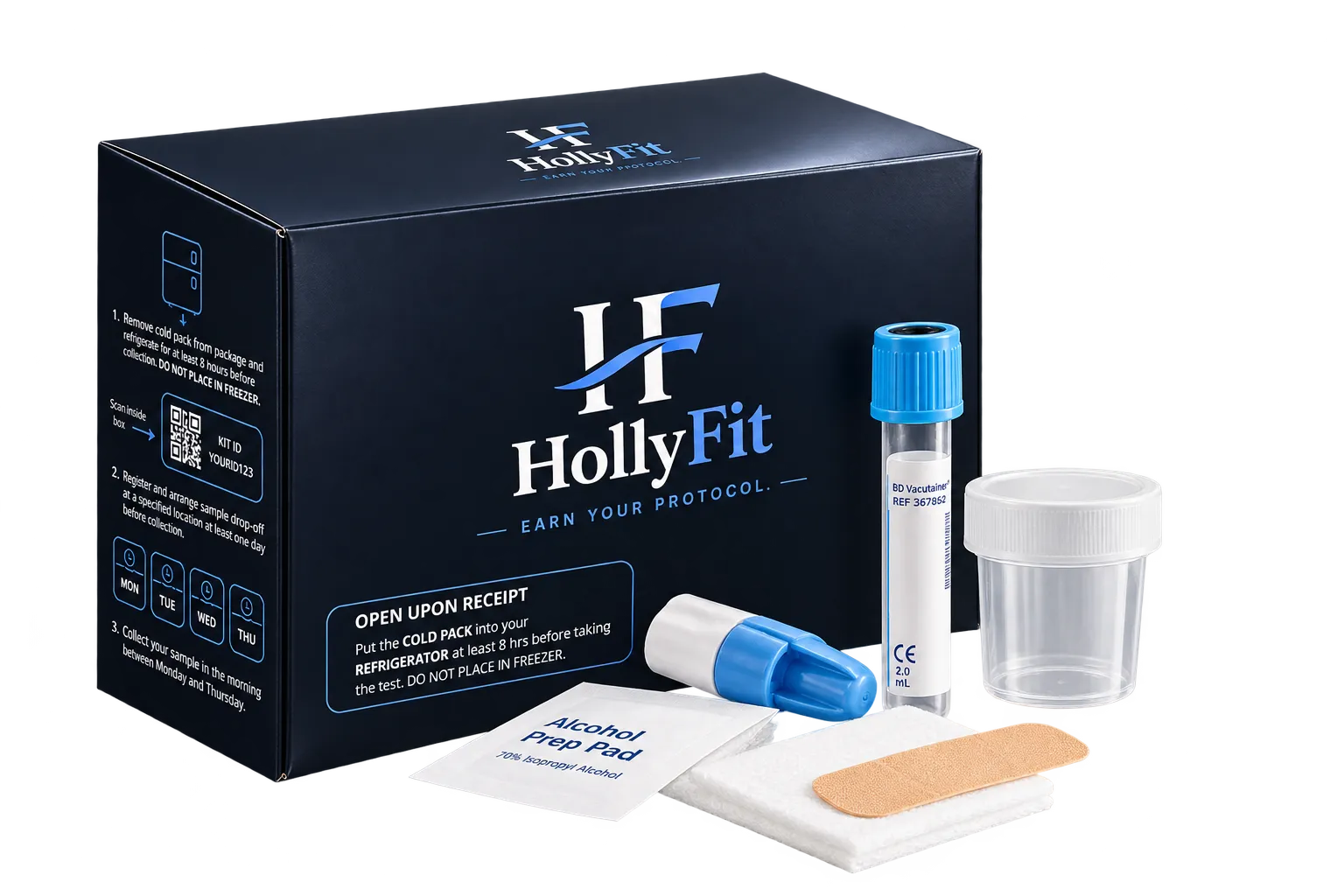
Comprehensive at-home bloodwork, full health plan, physician consult, 60 days full access $149
Apply Now
Skip to content

WOMEN'S HEALTH

Menopause Treatments

Your symptoms matter.
Your care should, too.

Perimenopause and menopause can bring changes in sleep, energy and comfort. HollyFit connects physician-guided care with personalized nutrition, strength training and coaching, so you can explore treatment and build habits around your needs.

Treatment decisions are made with a licensed physician. Prescribed injectable testosterone is included with annual membership. Other medications are paid separately upfront per prescribed supply or order.

Training & nutrition Physician review All in one app
Woman wearing headphones and flexing her arms after an outdoor workoutWoman in a turquoise shirt walking outdoors under a blue sky

01 / TREATMENT OPTIONS

Explore menopause care.
Make the decision together.

Your symptoms deserve an individual review. Your physician considers your health history, preferences and risks before discussing menopause treatment and any related health concerns.

Illustrative HollyFit estrogen cream dispenser with navy and silver packaging above blue water
MENOPAUSE CARE

Estrogen

Estrogen therapy may help eligible women manage hot flashes, night sweats or vaginal symptoms. Your physician reviews which formulation and route, if any, fit your needs.

What to discuss with your physician

Bi-Est cream

Bi-Est combines estriol and estradiol in a compounded preparation. It is not FDA-approved. Your physician should explain the exact formulation, its evidence and risks, and FDA-approved alternatives.

Estradiol cream

The product and route determine its use. Vaginal estradiol products address local symptoms; systemic estrogen treatments address symptoms such as hot flashes and night sweats. Do not assume every cream provides the same exposure.

Estriol vaginal cream

An estriol preparation intended for local vaginal symptoms, rather than hot flashes or night sweats. Estriol products are not FDA-approved in the United States. Discuss appropriate approved alternatives and the exact preparation with your physician.


Illustration of a matte white round tablet with a recessed HollyFit HF monogram on a blue background
INDIVIDUALIZED HORMONE CARE

Progesterone

Progesterone may be part of a plan that includes systemic estrogen, especially for women with a uterus. Your history and treatment determine whether it is needed.

What to discuss with your physician

Progesterone capsules

Oral progesterone may be prescribed with systemic estrogen to help protect the uterine lining when a woman has a uterus. Your physician determines the product and regimen appropriate to your treatment.

Progesterone troches

Compounded preparations that dissolve in the mouth. They are not FDA-approved and should not be assumed equivalent to capsules or adequate for uterine protection.

Progesterone cream

A topical preparation applied to the skin. Absorption can vary, and it should not be relied on for adequate uterine protection with systemic estrogen. Review alternatives and monitoring with your physician.

Illustrative HollyFit testosterone cream dispenser with navy and silver packaging above blue water
SEXUAL HEALTH EVALUATION

Women's testosterone

Persistent, distressing low sexual desire deserves a careful review. A physician may discuss testosterone for selected postmenopausal women with hypoactive sexual desire disorder.

What to discuss with your physician

Start with a full evaluation

Your symptoms, medical history, medications and other possible contributors are part of the conversation.

Understand off-label treatment

There is no FDA-approved testosterone indication for menopausal women. Discuss the evidence, uncertainties, risks and monitoring before considering treatment.

Illustration of a matte light blue round tablet with a recessed HollyFit HF monogram on a blue background
SEPARATE THYROID EVALUATION

Thyroid care

Thyroid concerns need their own assessment. Your physician reviews symptoms and appropriate testing before discussing treatment for a diagnosed thyroid condition.

What to discuss with your physician

Clarify what needs attention

Some thyroid symptoms can overlap with concerns raised during menopause. Thyroid medication does not treat menopause itself.

Discuss the exact medication

If treatment is indicated, ask your physician about the specific medication, including whether liothyronine (T3) is appropriate for your diagnosis, and the required monitoring. Thyroid hormones are not weight-loss medications.

Bioidentical describes a hormone's chemical structure, not a guarantee of safety. FDA-approved bioidentical options exist. Compounded medications are not FDA-approved; your physician can discuss appropriate options, risks and alternatives. Membership does not guarantee a prescription.

02 / YOUR STARTING POINT

Getting the right care.
Built around you.

Hot flashes, night sweats, disrupted sleep and vaginal discomfort can affect daily life during perimenopause and menopause. Your symptoms, medical history and preferences help guide an individual treatment plan.

HollyFit brings physician-guided evaluation together with training, nutrition and progress tracking. Medical treatment is considered individually, with ongoing support as your needs evolve.

01

Understand your symptoms.

Tell your physician about your symptoms, menstrual history, medications and goals. Testing is recommended when it is clinically useful.

02

Treat the person.

Review the whole picture, including health history, daily habits and individual risks. Discuss hormone and nonhormone options when appropriate.

03

Manage symptoms. Support strength.

Keep strength training, balanced nutrition, sleep and recovery in the plan while your physician evaluates treatment for menopause symptoms.

04

Connect your care.

Your physician manages medical treatment and follow-up. Coaching supports the training and nutrition part of your plan.

From your first test
to your next workout.

Testosterone Jan 2025

842 ng/dLLow

300 ng/dL 900 ng/dL

Your level is below the optimal range.
Discuss next steps with your provider.

Step 1

Tell us what you're working toward.

Start with a health assessment covering your goals, medical history, and what you want to improve. This gives the team context for your bloodwork and the plan that follows.

Your Results Doctor Assessed

March 2026

Vitamin D68 nmol/L
Normal
TSH2.1 mU/L
Normal
Cholesterol4.9 nmol/L
High

Step 2

Get the numbers behind your health.

Your bloodwork kit is sent to your home. Once your sample is processed, a physician reviews your results to help inform your next steps.

Dr. Michael Harrington
Dr. Michael Harrington, MDHollyFit Medical Director

Your Personalized Protocol

Training PlanStrength, conditioning, recovery
Nutrition GuidanceMacros, meal structure, and recipes
Supplement ProtocolCore supplements for your goals
Coaching SupportSupport for your plan

Step 3

Turn your results into a plan.

Your goals, health information, and physician analysis help inform your training, nutrition, and supplement protocol. Start using the most advanced workout, nutrition, and wearable tracking tools available to truly understand what works for you.

HollyFit daily overview showing physician visits, training, nutrition, check-ins and coach messages
Daily overview
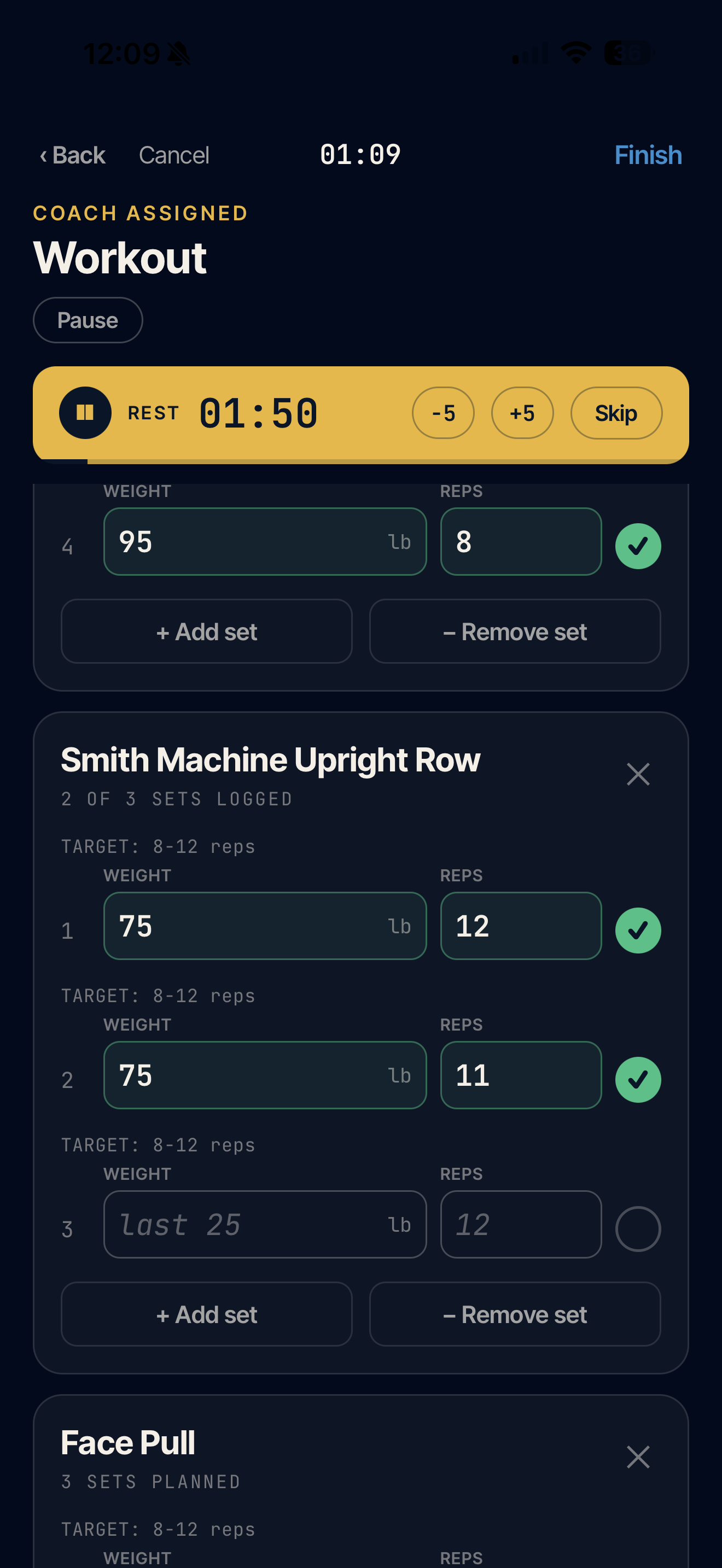
HollyFit workout tracker showing exercises, weights, reps, logged sets and a rest timer
Workout tracking

Step 4

Train, track, and keep moving.

Follow your workouts, track your daily activity, and check in with your coach through HollyFit. Continue with membership support according to the plan you choose.

Dr. Michael Harrington, HollyFit Medical Director
Dr. Michael Harrington, MDHollyFit Medical Director

04 / PHYSICIAN-GUIDED CARE

Menopause treatment.
Tailored to you.

Your physician considers your menopause symptoms, medical history, current medications and individual risks together. Relevant testing can help clarify next steps, but treatment decisions involve more than a single hormone result.

  • Discuss symptoms and your health history in context.
  • Review treatment options, benefits, risks and alternatives.
  • Plan appropriate follow-up as your needs change.
Schedule a free consult

Your physician independently makes clinical and prescribing decisions. Coach Holly Bot supports training and nutrition; it does not diagnose or prescribe.

05 / A FEW THINGS WORTH KNOWING

Good questions.
Clear answers.

Straight answers about menopause treatments, related care and your options.

What is bioidentical hormone replacement therapy?

Bioidentical describes hormones with the same chemical structure as hormones made by the body. Some FDA-approved medicines meet that definition. The term alone does not tell you whether a product is approved, compounded or appropriate for you.

Are compounded menopause hormone treatments FDA-approved?

No. Compounded preparations, including Bi-Est cream and progesterone troches, are not FDA-approved. They have not been shown to be safer or more effective than FDA-approved hormone therapy. Your physician can explain approved options and whether there is an individual medical reason to consider a compounded preparation.

How do Bi-Est, estradiol and estriol creams differ?

Bi-Est contains estriol and estradiol in a compounded cream. The exact ratio and strength depend on the prescription; compounded Bi-Est is not FDA-approved.

Estradiol is the estrogen ingredient in specific FDA-approved medicines, but the formulation and route matter. A vaginal cream primarily targets local symptoms. Systemic treatment may be used for hot flashes or night sweats when appropriate.

Estriol vaginal preparations are intended for vaginal dryness, irritation or discomfort during sex, rather than hot flashes. Estriol products are not FDA-approved in the United States. Your clinician can compare the specific product with approved alternatives.

What side effects and risks should I discuss?

Estrogen and progesterone can cause breast tenderness, headache, nausea or spotting; topical products can cause skin irritation. More serious risks, such as blood clots and certain cancers, depend on the treatment and your medical history. Discuss warning signs and monitoring with your physician. Report new or unexplained vaginal bleeding and review your prescription information before use.

Who may not be a candidate for hormone therapy?

Hormone therapy is not appropriate for everyone. Tell your physician about current medications, unexplained bleeding, pregnancy possibility and any history of hormone-sensitive cancer, blood clots, stroke, heart attack or liver disease. Your individual history guides the decision.

Do I need progesterone if I take estrogen?

For a woman with a uterus, systemic estrogen is generally paired with an appropriate progestogen to help protect the uterine lining. Low-dose local vaginal estrogen typically does not require additional progesterone. Your physician will explain the regimen relevant to your care; do not substitute a cream or troche for a prescribed capsule on your own.

How do progesterone capsules, troches and creams differ?

Capsules are swallowed, troches dissolve in the mouth and creams are applied to the skin. Their absorption, evidence and suitability differ, so they are not interchangeable.

An appropriate oral progesterone regimen can help protect the uterine lining with systemic estrogen. Compounded troches and creams should not be assumed to provide that protection. Discuss the exact product and monitoring with your physician.

What if my hormone bloodwork is in the normal range?

A single hormone result does not replace a clinical evaluation. Perimenopause is often assessed through age, symptoms and menstrual changes, and routine hormone testing is not always needed. Your physician decides whether testing could clarify your situation.

Is hormone therapy a weight-loss treatment?

No. Hormone therapy alone does not cause weight loss. Your care plan can address menopause symptoms while training, nutrition, sleep and other appropriate support remain part of the conversation.

How does thyroid care fit into menopause care?

Thyroid concerns require a separate evaluation. Your physician may recommend testing when symptoms or history suggest a thyroid condition. Thyroid medication treats an appropriate thyroid diagnosis, not menopause itself, and thyroid hormones are not weight-loss medications.

When is testosterone considered for women?

It may be discussed for selected postmenopausal women with hypoactive sexual desire disorder after a full evaluation. It is not a general treatment for low energy, brain fog or aging. Use for menopausal women is off-label in the United States and needs an individualized discussion of evidence, risks and monitoring.

What if symptoms begin before age 45?

Changes in periods or menopause symptoms before age 45 deserve clinical evaluation. Menopause between 40 and 44 is considered early; before 40 is premature. Your physician can assess the cause and discuss an appropriate longer-term care plan.

Are there nonhormone options?

Yes. A physician can discuss evidence-based nonhormone treatments when hormones are unsuitable or not your preference. Training, nutrition and recovery can support your broader health, but they do not replace evaluation of persistent symptoms.

How do I know which menopause treatment is right for me?

Start with HollyFit's health assessment and physician consultation. Your symptoms, whether you have a uterus, medical history, current medicines and individual risks all matter. Your preferences are part of the conversation, but your physician decides whether treatment is appropriate and what evaluation or follow-up is needed. Membership does not guarantee a prescription.

Does HollyFit also offer testosterone care for men?

HollyFit has a separate TRT page for men considering physician-guided evaluation of testosterone deficiency. Explore that page for its clinical review and care options.

Explore TRT for men

What does Coach Holly Bot do?

Coach Holly Bot provides training and nutrition guidance informed by your goals and the information you log. It helps you follow your plan and stay consistent. It does not diagnose medical conditions or prescribe medication. Those decisions belong to your physician.

How is my health information handled?

HollyFit’s privacy and health-data policies explain how information is used, protected and shared to provide services. Read our HIPAA policy and Privacy Policy for details.