

In this article
You did the hard thing. You started. You stayed with it. You've lost weight, you look better, you feel better, and you're not at your goal yet. Then the scale slows down. You're eating the same, training the same, and you can't find a single thing you've changed. So why did the weight stop coming off, and what do you do about it?
Here's how I define a plateau: three straight weeks with no weight loss while you're still eating and training the way you were when it was working. Three weeks doesn't sound long. Anyone who has lived it will tell you it feels like an eternity. You wake up every morning hopeful, step on the scale, and nothing. It is disheartening, and it's also completely normal.
If you train long enough, you will hit plateaus. Weight loss, muscle gain, body composition, strength. Everybody hits one eventually, including people who are in incredible shape. The goal isn't to never plateau. The goal is to know what to do when it happens.
To fix it, we have to figure out why it's happening in the first place. So before we get to solutions, let's make sure it's actually a plateau.
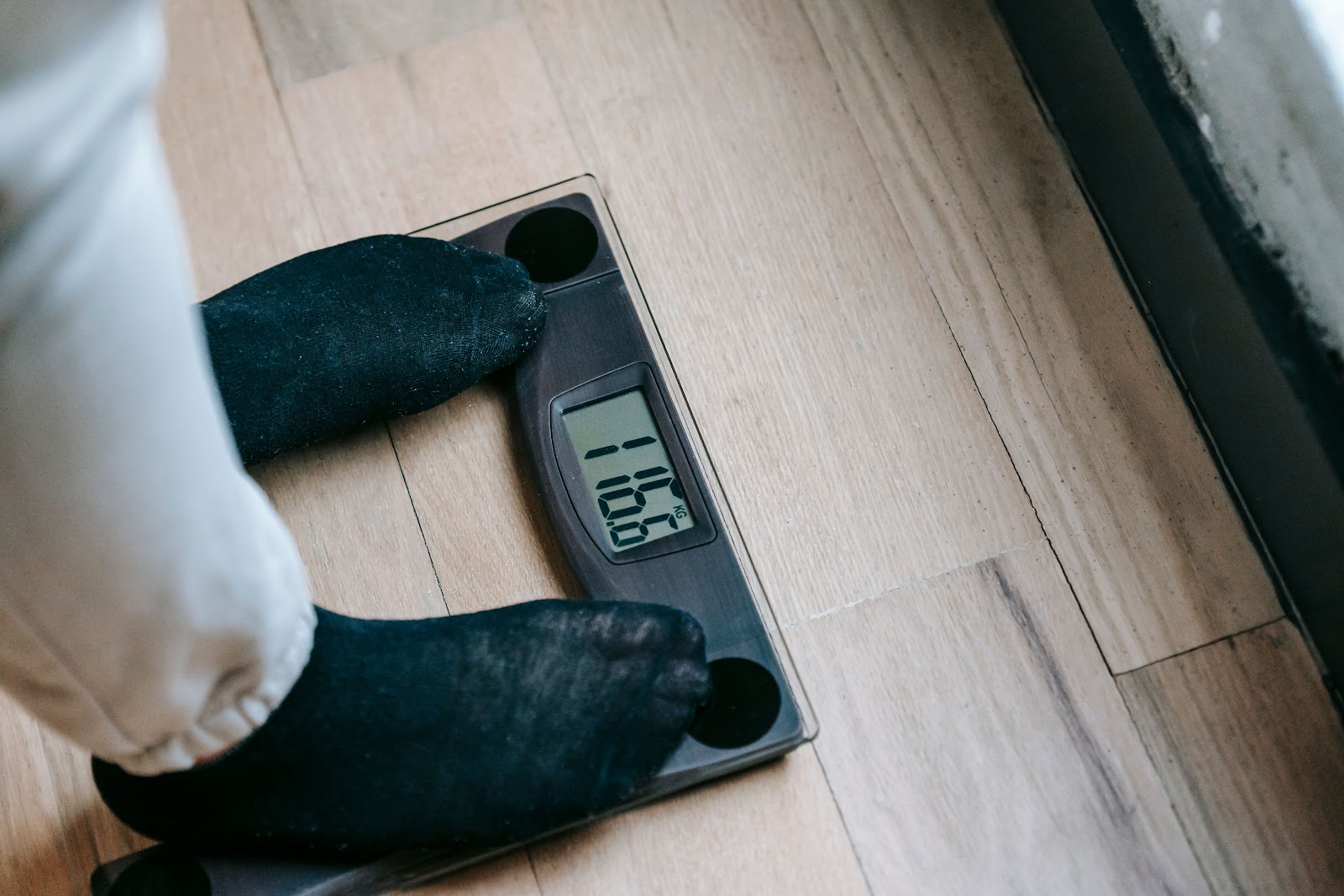
First, make sure it's a real plateau
Half the plateaus people panic about are noise. Your body weight can swing two to five pounds in a day from water, sodium, carbs, a hard leg session, a bad night of sleep, or where a woman is in her cycle. One bad weigh-in means nothing. One bad week means very little.
Weigh yourself every morning if you want, but only pay attention to the weekly average. Compare this week's average to last week's. If the average has been flat for three weeks, now we're talking about a plateau.
The scale also isn't the whole story. If you're lifting, and especially if you're lifting while on a GLP-1, you can lose fat and build muscle at the same time and the scale will sit still while your body changes completely. So track more than one thing:
Waist measurement at the belly button, same time of day, once a week
Progress photos every two weeks, same lighting, same spot
Your lifts. Are you getting stronger?
How your clothes fit
If the scale is flat but your waist is down and your lifts are up, you're not stuck. You're recomping. Keep going.
Find the reason first
A real plateau almost always comes down to one of these six. Go through them in order, because the first two are the most common and the least fun to admit.
1. You're eating a little more and moving a little less than you think
This is the number one cause and nobody wants it to be. Calorie creep is real. The "healthy" portions got bigger. The cooking oil stopped getting measured. The coffee creamer, the handful of almonds, the bites off your kid's plate, the Saturday night that turned into a Saturday and Sunday. None of it feels like cheating, and all of it adds up.
The other half is movement you don't notice. When you're in a deficit, your body quietly cuts back on the stuff that isn't the gym: you fidget less, you take the elevator, you sit a little more. You don't decide to do this. It just happens.
The fix is boring and it works. Track everything, honestly, for one week. Every bite, every drink, every oil. And set a step target, 8,000 to 10,000 a day, and hit it on top of your workouts. I've watched this one step alone break more plateaus than anything else on this list.
2. Your maintenance calories moved
If you set your deficit at 240 pounds and you're now 205, the math changed. A smaller body burns fewer calories just existing. The same intake that was a deficit two months ago might be maintenance today.
Recalculate every 10 to 15 pounds lost. That usually means pulling calories down a bit, or adding activity, or both. Small adjustments. You don't need to slash.
3. You're losing muscle along with the fat
Muscle is your metabolic insurance. Pound for pound it burns roughly three times what fat does, and more importantly it's what keeps you looking athletic instead of just smaller. If you're losing muscle with the fat, your metabolism slows and the deficit stops being a deficit.
The fix:
Lift weights three to five times a week at moderate to high intensity
Eat 0.7 to 1 gram of protein per pound of your goal body weight, every day
Put your biggest carb and protein meals before and after your workout, and eat lighter the farther you get from training and on rest days
Split your food into four or five smaller meals instead of three big ones
That last one isn't about "revving your metabolism." Total calories matter more than how many times you split them. Smaller meals help because they spread your protein across the day, which is what your muscle actually responds to, they're easier on your stomach if you're on a GLP-1, and they keep hunger from stacking up into a 9pm blowout.
4. Your hormones changed
Hormonal shifts are common with weight loss, especially when it's been fast. Thyroid plays a huge role in weight maintenance, and so do cortisol, estrogen, progesterone, and testosterone. When any of those drift, fat loss gets harder no matter how clean your diet is.
Getting blood work is never a bad idea. In a plateau it can be a great idea, because it explains a lot and it turns guessing into a plan.
5. You've worn yourself down
This one is tricky and I see it all the time. You've been crushing it. You got addicted to training. Your life is back on track and you feel like a new human. And your body is cooked.
The people who need a break are the last ones to admit it, because they're afraid they'll lose progress or slide back into old habits. I get it. That's me in a nutshell. If you're reading this thinking "that's definitely not me," it might be you.
Two fixes here. First, active recovery days: a hike instead of the gym, a long walk instead of a long run. You still get the win of doing something without digging the hole deeper. Second, and this is the one that scares people, a diet break. One to two weeks eating at maintenance. Not a free-for-all, maintenance. Then back to the deficit. It gives your hormones a chance to recover, it's a mental reset, and most people are shocked that they don't gain anything. It feels lazy. It pays off.

6. You're not training hard enough
The other end of the spectrum. Maybe you started a GLP-1 and lost a bunch of weight without touching a weight. That works for a while, then it doesn't. Hunger creeps back, your body adapts to the lower weight, and the drug alone stops moving the needle. That doesn't mean the GLP-1 quit working. It means the rest of the picture needs to catch up.
At minimum, every week:
Three hard, challenging lifting sessions
One cardio or metabolic workout where your heart rate actually gets up
Two or three easy cardio sessions, like incline treadmill walking or just walking outside
And if you're already doing all that, ask yourself when you last changed anything. The same workout for four months is a plateau cause all by itself. Add weight. Change your rep ranges. Swap a few movements. Your body adapts to what you give it, so give it something new.

The lever everyone skips: sleep and stress
I could have put this in the list above, but it deserves its own spot because it's the one people ignore and the one they can fix this week.
When you sleep under seven hours, your hunger hormones go the wrong direction, your cravings go up, your training suffers, and more of what you lose in a deficit comes from muscle instead of fat. Stack chronic stress on top of that, with cortisol running high all day, and your body gets very good at holding on to fat around your midsection no matter what the food log says.
You can do everything else on this page right and still stall if you're running on five hours and a short fuse. Protect seven to nine hours. Get the phone out of the bedroom. Keep caffeine to before noon. If stress is the problem, a daily walk outside counts as both your steps and your therapy.
If you're on a GLP-1
Everything above applies to you. A few things apply extra.
First, the plateau is built into the drug. In the big semaglutide and tirzepatide trials, weight loss leveled off somewhere around the 60 to 70 week mark for most people. That's the expected shape of the curve. Hitting a plateau on a GLP-1 doesn't mean it stopped working or that you failed. It means you've arrived at the part where the medication did its job and the rest is on you.
Second, protein. Appetite suppression makes it incredibly easy to under-eat protein without noticing, and that is exactly how people lose muscle on these medications. Protein first at every meal, hit your number, and don't let nausea talk you into skipping it. Smaller, more frequent meals are your friend here.
Third, water and fiber. Slowed digestion and constipation are real on a GLP-1, and a backed-up gut shows up on the scale. Drink more than you think you need and get your fiber in.
Fourth, don't adjust your own dose. If you've plateaued and you're not at the top of the dosing range, that's a conversation with your provider, not a decision you make in your bathroom with a syringe. The same goes for stacking anything else on top of it.
And if you try the carb cycling below, know that dropping carbs on a GLP-1 can make you lightheaded, because you lose water fast and you're probably already not drinking enough. Add salt and electrolytes on your low days.
My favorite tool for breaking a plateau: carb cycling
If a client is tracking honestly, training hard, sleeping, and still stuck, this is what I reach for. Carb cycling is a sharp way to eat for losing fat while keeping or building muscle, plateau or not, and it's the thing I love playing with most.
The idea is simple. You eat more carbs on the days you train hardest, like legs or back, and fewer carbs on lighter days, like shoulders or a rest day. Protein stays high every day. Fat goes up a little on low-carb days so you're not starving. Your weekly calories end up about the same, but you're putting the fuel where the work is.
There are a million ways to set it up. One very high day paired with one no-carb day. Two high, two low, three in the middle. Here's a week I'd hand a client who lifts four days:
A rough starting point for the numbers: high days around 1.5 to 2 grams of carbs per pound of goal body weight, moderate days around 1, low days under 0.5. Adjust from there based on how you feel and how the scale and the mirror respond.
The no-carb day does something else that matters. It makes your body drop water, and that gives you a quick win of seeing the scale move. Sometimes that one mental win is what flips your attitude and gets you back to attacking the rest of the journey. That's not nothing.
The mental side
The physical fixes are the easy part. The hard part is not letting three flat weeks undo three good months.
Zoom out. Pull up your weight from 90 days ago, not nine days ago. Look at the trend line, not the dot. Then count the wins the scale can't see: the lifts that went up, the pants that fit, the stairs that don't wind you, the fact that you're still showing up.
Then ask whether your goal has changed. Maybe you wanted to lose 40 pounds and you did. Maybe now you want to keep it off, get stronger, or build some muscle. Those aren't the same plan, and they don't all show up on the scale. If you've started lifting and you're gaining muscle while losing fat, that isn't a plateau at all. That's the goal quietly updating itself. If the number you picked on day one is the only thing you're measuring, you'll miss progress in strength, energy, blood pressure, glucose, and how you look in the mirror.
And here's the reframe I give every client who's stuck. A plateau is your body practicing maintenance. Holding weight steady while eating and training like a normal human is the exact skill you'll need for the rest of your life once you hit your goal. You're not failing at losing. You're rehearsing the part that comes next. Most people never learn it, and you're learning it early.
Your plateau checklist
Stuck for three weeks? Run this list top to bottom before you change anything drastic.
Confirm it's real: three weeks of flat weekly averages, not one bad weigh-in
Track everything honestly for seven days, alcohol included
Hit 8,000 to 10,000 steps a day on top of your workouts
Recalculate your calories for your current body weight
Lift three to five times a week, and change something if it's been the same for months
Protein at 0.7 to 1 gram per pound of goal weight, every day
Seven to nine hours of sleep
Cut the alcohol for the next three weeks and see what happens
If you're fried, take a diet break or a few active recovery days
Still stuck? Get blood work and look at thyroid and hormones
Then, and only then, play with carb cycling
If you go through that list and you're still not sure which one is you, that's what we're here for. At HollyFit your physician and your coach work from the same information, so when the scale stops, we don't blame the medication or tell you to eat less. We look at your training, nutrition, sleep, labs, and medication response together and fix the thing that's actually broken. Get your labs run, or book a call with me, and we'll find your reason and build the fix around it. Plateaus end. The people who break them are the ones who stop guessing.
This article is for educational purposes and isn't medical advice. Talk to your provider before changing your medication, your dose, or your diet in a significant way.
Your next chapter.
Built around you.
Training, nutrition, and physician-led care. One team that sees the whole picture.
Explore HollyFit