
In this article
Medically reviewed by Dr. Michael Harrington
"I feel okay."
That's the answer Dr. Michael Harrington hears most often, frequently from men whose testosterone is around 320. Then he asks a few more questions. How often are you having sex? Maybe once a month. How's your energy? Lower, but it's been that way for three or four years, so it feels normal.
If that sounds familiar, this guide is for you. Maybe you're considering TRT. Maybe you're already on it, injecting once a week and feeling off by the end of every week. Either way, we'll start with the question most clinics still get wrong: how often should you inject testosterone?
Some background: Dr. Harrington prescribes testosterone at HollyFit, and I've been on TRT for years. This article is the companion to our podcast episode, Everything You Need to Know About TRT (And What Most Clinics Get Wrong).
Watch the full episode on YouTube · Listen to the episode
The short answer: Inject at least three times a week, and daily if you can, using smaller doses with a small sub-Q needle. Weekly or every-other-week injections cause large swings in your levels, and those swings drive many of the estrogen, blood-thickness and mood issues we see.
How often should you inject testosterone?
At least three times a week. That's Dr. Harrington's minimum: "The least frequent, three times a week. I won't let you do it any less than that." Daily is better.
For years, the standard was one injection a week, or one every two weeks. Dr. Harrington calls that "OG medicine," and many clinics, including some of the largest telehealth brands, still prescribe it that way.
The reasoning is simple. When you were 18, your body didn't release a large dose of testosterone on the 1st and the 15th of the month. It released a small amount every night. Smaller, more frequent injections follow that pattern. One large weekly injection doesn't.
This isn't about taking more testosterone. It's the same weekly dose, divided. As Dr. Harrington puts it: "I don't even want to change your weekly dose. Let's just cut it up."
Watch: Dr. Harrington on why once-a-week injections are "old school." See the Reel on Instagram
Daily vs. twice a week vs. weekly injections
| Schedule | What your levels do | What it means for you |
|---|---|---|
| Every 2 weeks | A large spike, then a long decline | The largest swings in mood, estrogen and blood thickness |
| Once a week | Peaks the next day, drops sharply before the next dose | Workable, but more risk of side effects and more labs out of range |
| Twice a week | Smaller swings, still a dip before each dose | An improvement, but below Dr. Harrington's minimum |
| Three times a week | Much steadier | Dr. Harrington's minimum |
| Daily (sub-Q) | Closest to how your body produced it naturally | The most stable option |
Dr. Harrington's take: "I've seen better prostate health clinically. I've definitely seen lower hematocrits, the blood thickness, and lower estrogen without doing a thing except changing the injection frequency."
That's what we've seen in our own patients, not the result of a published trial. Studies comparing daily and weekly dosing at the same total dose are still to come, and we'll be watching for them.
Does TRT increase estrogen?
It can, and large weekly injections make it worse. Here's how I explain it to clients.
Say your testosterone is 400. After a large weekly injection, it's around 1,100 ng/dL the next day. Some of that testosterone converts to estrogen (a process called aromatization), mostly in fat tissue, so the more body fat you carry, the more converts. Your estrogen rises from about 20 to 50.
Over the next week to ten days, testosterone falls quickly, back to around 600, while estrogen stays elevated. Now your testosterone is lower, your estrogen is higher, and the ratio between them is off. You don't feel right, and over time that imbalance can contribute to acne or gynecomastia.
Smaller, more frequent doses keep both levels steadier. And estrogen isn't the problem on its own. In Dr. Harrington's words, "Men absolutely need estrogen." The goal is keeping it in the right range.
Injecting once a week and feeling off before your next dose? That's often a scheduling issue. Talk to the HollyFit team about your protocol.
Is subq testosterone as effective as IM?
Yes. Testosterone was long assumed to require an intramuscular injection, but it works well subcutaneously. The main difference is absorption: sub-Q absorbs a little more slowly, which is easier on your system.
The needles have improved, too. Five years ago, many patients were handed an inch-and-a-half needle for an intramuscular shot. Today's sub-Q needles are small enough that most people barely feel them. If needles make you uneasy, have your partner or a friend give the first few injections, in the glutes or the abdomen. As Dr. Harrington says, "You do it a few times with those needles, you realize... it's extremely easy."
For transparency: I still inject intramuscularly, out of habit after years on TRT. For most men, though, sub-Q is the better fit.
Testosterone cream vs. injection (vs. pellets)
If you want precise control over your levels, injections are the best option. Cypionate and enanthate are "super similar," according to Dr. Harrington, and cypionate is the standard choice for TRT.
Creams add variables: how hydrated your skin is, where you apply it, and whether the pump delivers the same amount every time. With injections, Dr. Harrington says you can "pinpoint down to the half a milligram" what your testosterone will do. With cream, "you're just kind of hoping for the best."
Still, cream is far better than living with low testosterone. If needles are a deal-breaker, cream is a reasonable choice.
| Option | Advantages | Drawbacks | Best for |
|---|---|---|---|
| Injections | Dose can be adjusted precisely; labs are easy to interpret | Needles (small ones) | Most men |
| Cream | No needles | Absorption varies; harder to fine-tune | Men who won't use needles |
| Pellets | Stable levels without frequent dosing | Still need labs; can overshoot or undershoot; slower to adjust | Men 70+, or anyone who refuses needles |
Who should not take TRT (and who should)
TRT isn't right for everyone. Dr. Harrington starts with symptoms, not a single lab value: "I'd much rather treat the patient and their symptoms as opposed to just finding a number and treating it."
TRT is probably not the right step if:
- Your total testosterone, free testosterone and SHBG are all normal, and your goal is simply to lift more.
- You're in your 20s and haven't addressed lifestyle factors. Very few men in their 20s have clinically low testosterone.
- You plan to have children soon (see below).
Address these first, since each one lowers testosterone:
- Alcohol. If you drink most nights, stop for a month and retest.
- Sleep. Chronic short sleep disrupts hormone production.
- Stress. Sustained high stress takes a toll.
- Crash diets. Cutting out an entire macronutrient, such as carbohydrates, for long periods.
As Dr. Harrington puts it, "You can fix these things, and you don't have to jab yourself weekly with a needle."
The picture changes for a man who is 35 to 45, eats reasonably well, has normal stress, sleeps seven to eight hours, and still has a testosterone level around 300, along with low libido, low energy and little motivation. "We can talk intervention for sure," says Dr. Harrington. (In my experience, seven to eight hours of sleep with normal stress is rarer than it sounds. Most of the men I work with are lucky to get six.)
Not all low testosterone has the same cause. In primary hypogonadism, the testes can't produce enough. In secondary hypogonadism, the signal from the brain isn't reaching them. I compare it to a restaurant where the cook is ready but the waiter has stopped bringing the orders. For some men with secondary low T, a prescription such as enclomiphene can restore that signal. That's very different from an over-the-counter "testosterone booster."
Is 300 testosterone low?
For most men, it's low enough to notice. Average testosterone levels have declined over the past several decades, and lab reference ranges have shifted down with them. Dr. Harrington: "Under 500, you're probably going to be symptomatic, at least lack of libido, a little bit of energy decrease."
The challenge is that low levels start to feel normal. I've worked with men who believed they felt fine at 260, then reached 700 and found they were sleeping better and their libido was back.
Libido and erectile dysfunction are also different issues. You can still get an erection with very low testosterone. Testosterone drives desire, along with sleep quality, recovery, muscle and your general sense of feeling like yourself.
Dr. Harrington's "I feel okay" patient is a good example: a testosterone level of 320, married 20 years, sex about once a month, and energy slowly declining for three or four years. About a month after starting testosterone, he reported more energy, a renewed sex drive, and workouts that finally felt productive.
Dr. Harrington's take: "If you're not horny, you're not healthy."
Low free testosterone but normal total? Why free T matters more
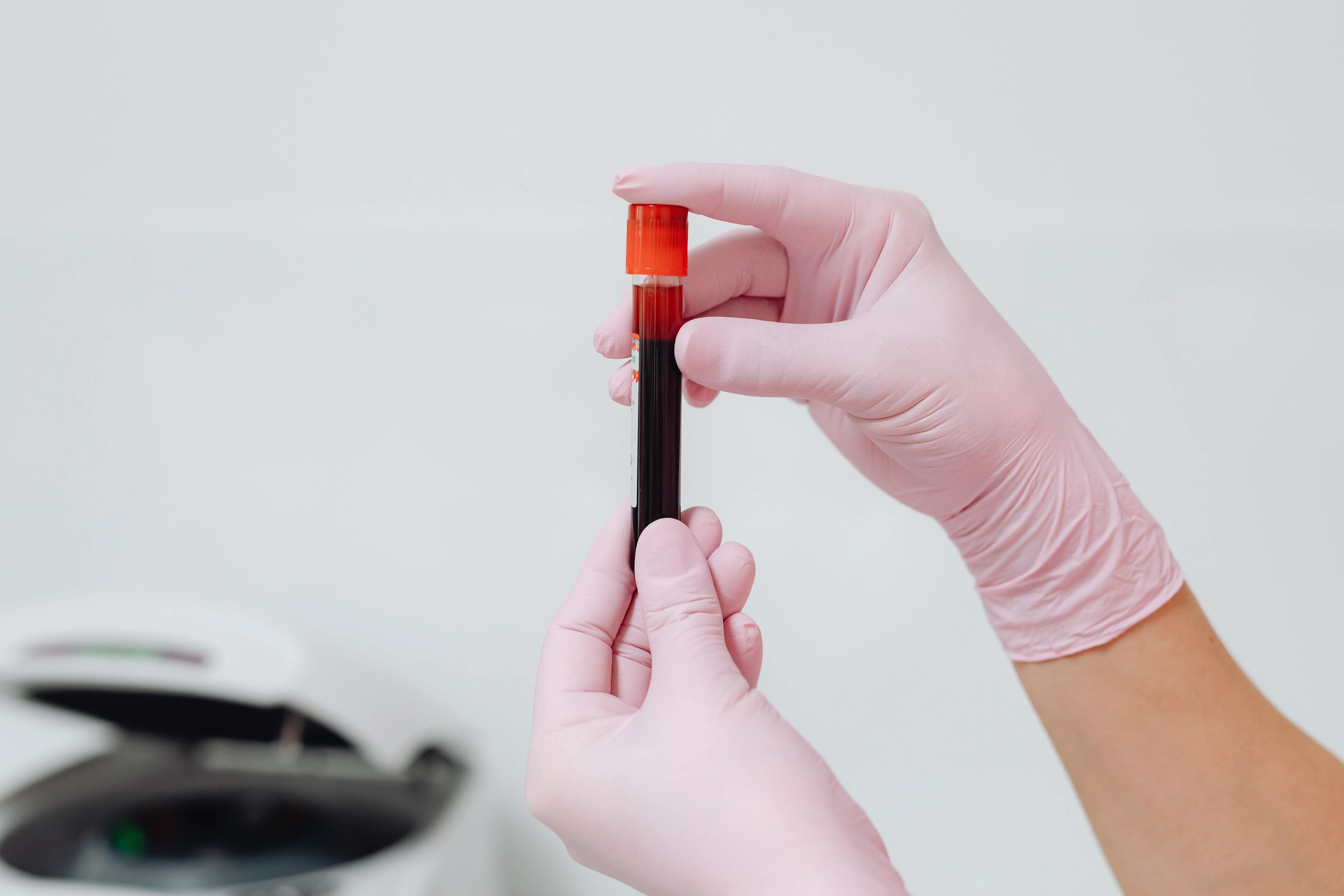
Most lab reports show total and free testosterone. You also need a third value: SHBG, or sex hormone binding globulin.
SHBG is a protein that binds testosterone and holds it in a form your body can't use. What remains is your free testosterone. As Dr. Harrington says, "Your free is where the money is. That's what's active." Free testosterone is what supports libido, energy, muscle and metabolism.
I explain it this way:
- Total testosterone is your gross pay.
- SHBG is the tax.
- Free testosterone is your take-home pay.
Two men with the same gross pay can take home very different amounts, which is why two men on the same dose can feel very different.
A high total with very high SHBG can still leave free testosterone low, and the symptoms with it. A moderate total with low SHBG can produce excellent free testosterone. My own labs once showed a total around 680 with free testosterone near 300, and I sent them straight to Dr. Harrington because the result was so strong.
Make sure your labs include all three values. Many lower-quality telehealth and hormone clinics test only total testosterone, and some never report SHBG at all. I look at free testosterone first, because it has the greatest effect on how I feel.
Can you lower SHBG? Dr. Harrington's answer: sleep eight hours, eat well and lower your stress. It's difficult to change, and some men naturally run high. If that's you, your doctor should account for it in your treatment.
TRT side effects and how to manage them
Most side effects come from too high a dose or from large swings in levels, which is why the injection schedule and regular labs matter. What to watch for:
- Early mood changes. Common while levels stabilize. They typically resolve once levels are steady.
- Acne. Usually linked to too high a dose or large fluctuations.
- Higher hematocrit and blood pressure. Testosterone increases your red blood cell count (hematocrit), which thickens the blood and makes the heart work harder. Some men are genetically predisposed. Dr. Harrington is clear about the evidence: high hematocrit on TRT hasn't been shown to cause clots, but it does raise the risk, so it should be monitored. In our patients, smaller and more frequent doses have meant lower hematocrit.
- Prostate (BPH). BPH is an enlarged prostate, not cancer. Signs include a weak stream, waking at night to urinate, or trouble starting. A 2015 review of 35 studies found TRT did not appear to cause or worsen urinary symptoms in men with mild symptoms. In my experience, splitting the same weekly dose into smaller daily sub-Q injections often eases symptoms, though that's an observation, not a study finding.
- PSA. Your doctor should monitor PSA, especially when you first start, because your DHT will rise.
- Testicular shrinkage. Size is largely cosmetic. Function matters more, especially if you want children.
Does TRT cause hair loss?
It can, if you're predisposed. The cause is DHT, which Dr. Harrington describes as "super strong testosterone." DHT supports erections, strength and fat loss, but men prone to male-pattern baldness have more DHT receptors in the scalp, and TRT, particularly at too high a dose, can speed up thinning.
DHT blockers such as finasteride and dutasteride are the usual solution. Some men take them for years without issues; others experience lower sex drive or erectile problems. In our experience, those effects aren't permanent and can be managed.
Dr. Harrington favors topical dutasteride. In his words, it "doesn't get systemic" the way oral medication does, and a recent study found it outperformed finasteride for hair regrowth.
Dr. Harrington's take: "DHT shouldn't be the enemy, but you've got to keep it in check before it becomes the enemy."
Can you have kids on TRT?

Yes, with planning. Testosterone from an outside source signals your body to reduce its own production, which can lower fertility. If you're 25 and planning a family, it's not the time to start TRT.
If you want children in the next couple of years:
- Get a fertility test first. It's useful information whatever you decide.
- Weigh your symptoms. According to Dr. Harrington, if they're severe, starting now may be worth it. If they're mild, waiting may be reasonable.
- Know your options. HCG and enclomiphene can help maintain natural function.
- Work with a doctor you trust to review the results together.
Waiting two years, then trying for two more while feeling run-down the entire time, isn't your only option. A doctor can build a plan that protects your fertility and treats your symptoms now.
What happens when you stop TRT?
"All your symptoms come back," says Dr. Harrington. Most men return to where they were before starting, and some end up lower. "You may get some of that function back. You definitely won't get all of it back."
That's why we recommend treating TRT as a long-term decision. It isn't a cycle. Cycling on and off comes from bodybuilding, where men run doses several times above the normal range. TRT restores what your body should be producing. As Dr. Harrington puts it, "We're not going to superhuman testosterone levels. We're replacing what you're supposed to have had anyway."
There's another side to this. If you're 50 with a testosterone level of 220 and you're holding off because you don't want a long-term commitment, your levels won't be any better at 60. So why wait ten years to feel well again?
TRT does carry risks, and Dr. Harrington is direct about that: "The risk to benefit ratio needs to be in line. If that's too much for you, then stay away. That's fine." His role is to help you get the benefits while managing those risks with regular labs.
Quick answers to common TRT questions
Is estrogen bad for men?
No. "Estrogen is great for men," says Dr. Harrington. The goal is keeping it in the right range, which steady dosing makes easier.
Is TRT a steroid cycle?
No. TRT replaces what your body should be making. It isn't a cycle.
Do natural testosterone boosters work?
Not in any meaningful way. According to Dr. Harrington, ashwagandha, tongkat ali, fenugreek and zinc raise testosterone by two or three percent at most. Prescription enclomiphene is a different category entirely.
Will TRT cause "roid rage"?
No. Some men feel moody or on edge at first while their levels settle, and that typically passes once levels are stable. My theory is they've simply forgotten what it feels like to be themselves.
Is testosterone gel safer than injections?
No. Gel is more variable, and in Dr. Harrington's view, more variable means less safe.
How often do you need blood work on TRT?
At least every six months once you're stable, and every three months if your levels are still changing.
The bottom line
The goal isn't the highest possible number. It's what Dr. Harrington calls "the lowest dose that you're optimized at," where you feel well and everything works as it should. And "lowest effective dose" doesn't mean "just okay." If your labs look fine but your energy and drive are still low, the dose isn't effective.
Key takeaways:
- Inject at least three times a week, ideally daily, with a small sub-Q needle.
- Test total testosterone, free testosterone and SHBG, not total alone.
- Address alcohol, sleep, stress and diet before starting.
- Treat TRT as a long-term decision, and plan ahead if you want children.
- Get blood work at least every six months.
The full episode covers more, including our discussion of DHEA.
Watch the full episode on YouTube · Listen to the episode · Follow Earn Your Protocol
Not sure where you stand? Whether you're considering TRT or already on it and something feels off, we'll review your full panel and your symptoms, not just one number. Talk to the HollyFit team.
About the authors
Coach Kyle Holland co-hosts the Earn Your Protocol podcast and is Dr. Harrington's business partner at HollyFit. He has been on TRT for years and has worked with clients on hormones since his years coaching bodybuilders.
Dr. Michael Harrington prescribes testosterone at HollyFit and co-hosts Earn Your Protocol.
This article is for educational purposes only and isn't medical advice. Talk to your doctor before starting, stopping or changing any medication.
Your next chapter.
Built around you.
Training, nutrition, and physician-led care. One team that sees the whole picture.
Explore HollyFit